Guardrails: Rate Limits, Content Filtering and Compliance
Guardrails Implementation: Rate Limiting, Content Filtering, and Compliance Controls
Guardrails implementation represents a critical framework for organizations deploying AI systems, APIs, and digital platforms that require robust security and operational controls. These protective measures encompass rate limiting to prevent resource exhaustion, content filtering to ensure appropriate outputs, and compliance controls to meet regulatory requirements. As businesses increasingly rely on automated systems and generative AI technologies, implementing comprehensive guardrails has become essential for maintaining service quality, protecting user safety, and avoiding legal liabilities. This strategic approach balances innovation with responsibility, ensuring that digital systems operate within acceptable boundaries while delivering value to users and stakeholders.
Understanding the Foundation of Guardrails in Modern Systems
Guardrails serve as the protective infrastructure that prevents systems from operating outside intended parameters. Think of them as the safety barriers on a highway—they don’t restrict normal operation but prevent catastrophic failures when conditions become challenging. In the context of digital platforms and AI systems, guardrails establish boundaries that protect both the service provider and end users from potential harm, whether that’s system overload, inappropriate content generation, or regulatory violations.
The implementation of guardrails has evolved significantly alongside the complexity of modern applications. Early systems relied primarily on basic input validation and simple throttling mechanisms. Today’s guardrail architectures must address multifaceted challenges including sophisticated attack vectors, nuanced content moderation requirements, and increasingly complex regulatory landscapes spanning multiple jurisdictions. This evolution reflects the growing sophistication of both user expectations and potential misuse scenarios.
Organizations implementing guardrails must balance several competing priorities. Performance optimization demands minimal latency overhead, while security requirements necessitate thorough checking mechanisms. User experience considerations argue for permissive policies, yet risk management requires conservative boundaries. Successfully navigating these trade-offs requires a thoughtful architectural approach that layers different guardrail types to create defense-in-depth while maintaining system responsiveness and usability.
Rate Limiting: Protecting Resources and Ensuring Fair Access
Rate limiting constitutes the first line of defense against resource exhaustion attacks and ensures equitable access across user populations. By controlling the frequency of requests individual users or systems can make within specific timeframes, organizations prevent both malicious actors and unintentional overuse from degrading service quality. Modern rate limiting implementations utilize various algorithms including token bucket, leaky bucket, and sliding window approaches, each offering distinct advantages for different use cases.
Strategic rate limiting goes far beyond simply preventing denial-of-service attacks. It enables tiered service models where premium users receive higher request allowances, supports cost management by preventing unexpected infrastructure scaling, and provides early warning signals about unusual usage patterns that may indicate security breaches or integration errors. Well-designed rate limits communicate clearly with users through informative error messages and response headers that indicate remaining quota and reset times.
Implementation considerations for effective rate limiting include identifying the appropriate granularity for limits—whether per user, per API key, per IP address, or combinations thereof. Organizations must also decide between hard limits that immediately reject requests versus soft limits that queue requests or temporarily degrade service quality. Geographic distribution adds complexity, as distributed systems require coordinated rate limiting across multiple data centers to prevent users from circumventing limits by routing requests through different regions.
Advanced rate limiting strategies incorporate adaptive mechanisms that adjust thresholds based on system load, time of day, or detected threat levels. During traffic spikes from legitimate sources, temporary limit increases can maintain user satisfaction while still protecting core infrastructure. Conversely, when security monitoring detects suspicious patterns, limits can automatically tighten to contain potential threats while security teams investigate.
Content Filtering: Ensuring Safety and Appropriateness
Content filtering has emerged as a paramount concern particularly for systems incorporating generative AI, user-generated content platforms, and communication tools. These guardrails analyze both input prompts and output responses to identify and mitigate harmful, inappropriate, or policy-violating content before it reaches end users. The challenge lies in achieving high accuracy while minimizing false positives that frustrate legitimate users and false negatives that allow harmful content through.
Modern content filtering implementations employ multi-layered approaches combining keyword blacklists, pattern matching, machine learning classifiers, and increasingly sophisticated natural language understanding models. Each layer addresses different content risks with varying precision and recall characteristics. Simple keyword filtering catches obvious violations quickly with minimal computational overhead, while ML-based classifiers detect nuanced issues like veiled threats, implicit bias, or context-dependent inappropriateness that rule-based systems miss.
For organizations deploying generative AI systems, content filtering must address both prompt injection attacks where users attempt to circumvent safety measures through carefully crafted inputs, and output validation to ensure generated content aligns with ethical guidelines and brand standards. This dual-sided filtering creates a protective envelope around the AI model itself. Techniques like semantic similarity comparison, toxicity scoring, and factual consistency checking help maintain output quality while preventing the generation of harmful or misleading information.
The human element remains crucial in content filtering systems despite automation advances. Human-in-the-loop processes allow reviewers to audit edge cases, provide feedback that improves filtering models, and make nuanced decisions about context-dependent content. Organizations must carefully design these workflows to protect reviewer well-being while maintaining efficiency, often employing techniques like sampling strategies, automated pre-screening, and psychological support resources for reviewers exposed to disturbing content.
Compliance Controls: Navigating Regulatory Requirements
Compliance controls represent the guardrails that ensure organizational systems adhere to legal and regulatory requirements across jurisdictions. With regulations like GDPR, CCPA, HIPAA, and emerging AI-specific legislation, organizations must implement technical controls that enforce data protection principles, content restrictions, and operational transparency requirements. These controls transform abstract legal obligations into concrete system behaviors that can be monitored, audited, and verified.
Data privacy regulations necessitate guardrails controlling what information systems collect, how long they retain it, and under what circumstances they share it. Implementation requires privacy-by-design architectures where consent management, data minimization, and purpose limitation principles are encoded into system logic rather than treated as afterthoughts. Technical measures like automated data retention policies, consent tracking systems, and data subject rights fulfillment workflows operationalize compliance requirements that might otherwise remain aspirational.
Industry-specific regulations impose additional guardrail requirements. Financial services must implement controls preventing market manipulation and ensuring transaction transparency. Healthcare systems require stringent access controls and audit logging to protect patient information. Content platforms face obligations regarding illegal content detection and reporting across different national frameworks. Organizations operating internationally must implement jurisdiction-aware guardrails that apply appropriate rules based on user location, content origin, and applicable legal frameworks.
Compliance monitoring and reporting systems form essential components of the guardrail infrastructure. Automated compliance dashboards aggregate metrics demonstrating adherence to regulatory requirements, while audit logging captures detailed records of system decisions for forensic analysis. These systems must balance comprehensive documentation with storage costs and privacy considerations, often employing techniques like log aggregation, sampling, and anonymization to maintain useful records without creating excessive data retention burdens or new privacy risks.
Architectural Patterns and Implementation Best Practices
Successful guardrails implementation requires thoughtful architectural decisions that balance effectiveness with operational practicality. Centralized versus distributed guardrail placement represents a fundamental design choice. Centralized guardrails implemented at API gateways or reverse proxies provide consistent enforcement and simplified management but may create bottlenecks and single points of failure. Distributed guardrails embedded within microservices offer resilience and lower latency but complicate consistency and updates.
Layered guardrail architectures typically prove most effective, implementing different controls at appropriate system tiers. Edge-level rate limiting provides coarse-grained protection against volumetric attacks with minimal resource investment. Application-level content filtering performs detailed analysis with full context awareness. Data-layer compliance controls enforce fine-grained access policies based on user permissions and data classifications. This defense-in-depth approach ensures that even if one guardrail layer fails or is circumvented, others provide backup protection.
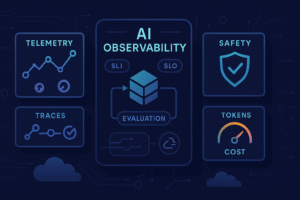
Observability and continuous improvement form critical aspects of guardrails implementation. Comprehensive monitoring captures metrics like rejection rates, false positive frequencies, processing latencies, and bypass attempts. This telemetry feeds into regular review processes where teams evaluate guardrail effectiveness and adjust parameters to improve accuracy while reducing friction. A/B testing frameworks enable safe experimentation with modified guardrail configurations before broad deployment, while shadow mode implementations allow new filtering approaches to be validated against production traffic without impacting user experience.
Configuration management and policy-as-code practices enable agile guardrails that evolve with changing requirements. Externalizing guardrail policies from application code allows security and compliance teams to update rules without requiring development cycles. Version control and change management for policies provide audit trails and rollback capabilities. Feature flags enable gradual rollout of new guardrails or temporary relaxation during special circumstances. These operational practices transform guardrails from static barriers into dynamic, responsive systems that adapt to emerging threats and changing business needs.
Conclusion
Guardrails implementation through rate limiting, content filtering, and compliance controls has become foundational for organizations operating digital systems in today’s complex threat and regulatory landscape. Rate limiting protects infrastructure resources while enabling fair access distribution. Content filtering ensures safety and appropriateness of user interactions and AI-generated outputs. Compliance controls operationalize legal and regulatory requirements through technical enforcement mechanisms. Successful implementation requires layered architectures that balance security with usability, comprehensive observability enabling continuous improvement, and operational practices supporting agile policy evolution. As systems grow more sophisticated and regulations more comprehensive, organizations that invest in robust, well-designed guardrails position themselves to innovate confidently while managing risk effectively and maintaining stakeholder trust.
What is the difference between rate limiting and throttling?
While often used interchangeably, rate limiting typically refers to hard caps that reject requests exceeding specified thresholds, returning error responses immediately. Throttling generally describes strategies that slow down or queue requests rather than outright rejecting them, allowing eventual processing. Rate limiting protects systems from overload, while throttling attempts to smooth traffic spikes while maintaining service availability.
How do I determine appropriate rate limits for my API?
Establish rate limits based on your infrastructure capacity, cost considerations, and usage patterns. Begin by analyzing typical user behavior to understand normal request frequencies, then set limits with comfortable headroom above legitimate use but below thresholds that would impact system performance. Consider implementing tiered limits for different user classes and monitor closely after deployment to identify necessary adjustments based on real-world feedback.
Can content filtering systems work in real-time for high-volume applications?
Yes, but implementation requires careful architectural design. Use lightweight filtering methods like keyword matching and pattern recognition for initial screening, reserving computationally intensive ML-based analysis for content flagged as potentially problematic. Implement asynchronous processing where appropriate, allowing immediate content publication with post-publication review for non-critical applications, or caching filter results for frequently encountered content patterns to reduce redundant processing.
What are the most common compliance frameworks requiring technical guardrails?
Key frameworks include GDPR for data privacy in the EU, CCPA/CPRA for California consumers, HIPAA for healthcare information, PCI DSS for payment card data, SOC 2 for service organization controls, and emerging AI-specific regulations like the EU AI Act. Industry-specific frameworks such as FINRA for financial services or COPPA for children’s online privacy also mandate specific technical controls depending on your sector and user base.